The Challenge
A $200M philanthropic organization was managing grants, donor relationships, program outcomes, and board reporting across dozens of disconnected spreadsheets, email chains, and legacy databases.
The symptoms were familiar:
- No single source of truth. Finance had one number, program teams had another, and leadership had a third.
- Manual, error-prone reporting. Every board meeting required 20+ hours of data reconciliation.
- Grant tracking in chaos. Deadlines were missed. Reporting requirements fell through the cracks.
- Staff turnover amplified everything. Institutional knowledge lived in individual inboxes.
The organization had attempted two previous system migrations — both failed. They came to us skeptical, cautious, and behind on three grants.
The Approach
Rather than starting with technology, we started with operations.
Week 1-2: Workflow mapping
We spent the first two weeks doing nothing but observation. Shadow sessions with program managers, grants officers, and the finance team. We mapped every workflow from intake to reporting. We documented every spreadsheet — who owned it, who used it, when it was last updated, and what decisions it informed.
Week 3: Architecture design
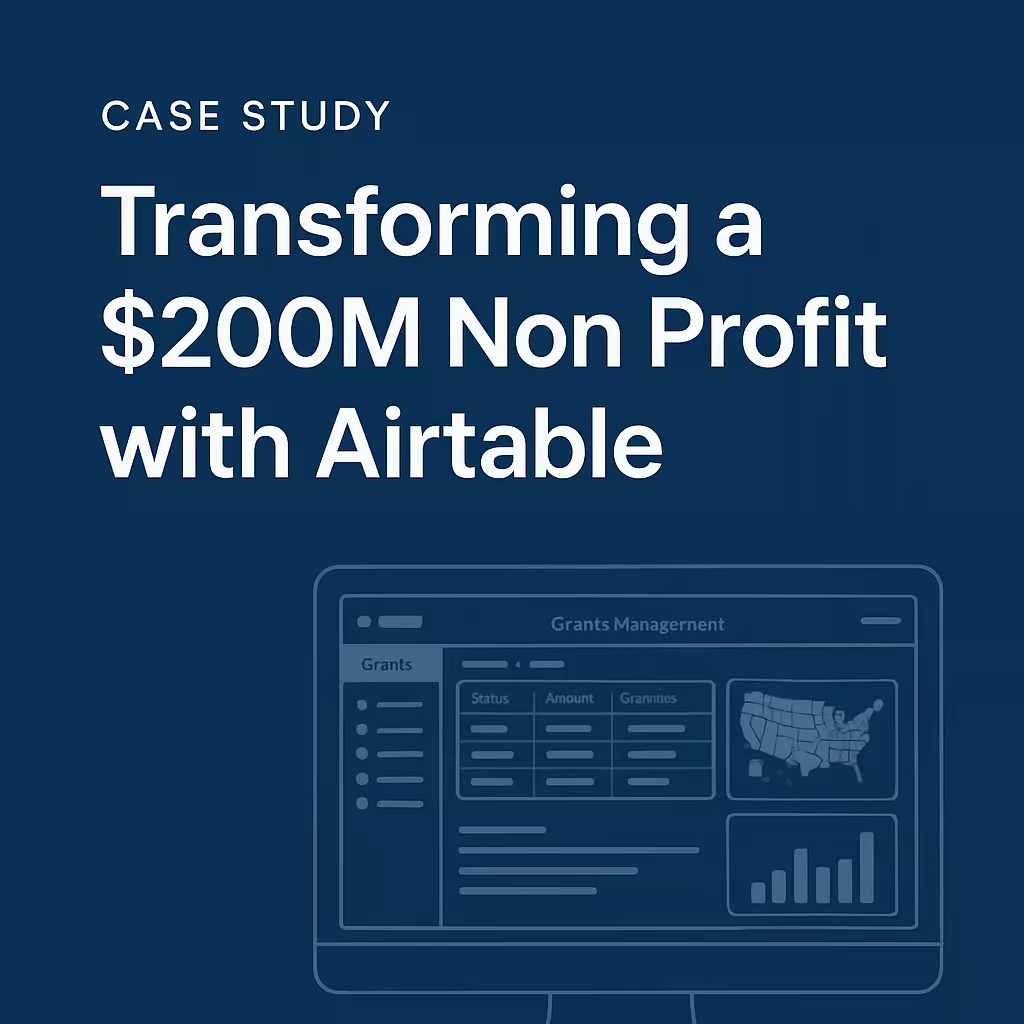
From that foundation, we designed an Airtable base that mirrored the way the organization actually operated — not an idealized version of how they wished they operated.
Key design decisions:
- Grants and programs linked bidirectionally to donors, contacts, and budgets
- Automated milestone tracking with proactive deadline alerts
- Role-based views so each team member saw exactly what they needed — nothing more, nothing less
Weeks 4-6: Build and test
We built in Airtable, tested against real data, and iterated based on user feedback. Nothing went live without a real user putting it through its paces first.
Week 7-8: Migration and training
Data migration is where most projects die. We built the migration scripts ourselves, validated every record, and ran parallel systems for two weeks before cutting over.
The Results
Six months post-launch:
- Board reporting time dropped from 22 hours to 4 hours per cycle
- Zero missed grant deadlines in the first year after launch
- 14 staff members trained and actively using the system daily
- $2.3M in grant funds tracked through a single, reliable system for the first time
The CFO told us: "I've been here twelve years. I've never had a Monday morning where I knew exactly where we stood before 9 AM. Now I do."
What Made It Work
A few things that aren't obvious from the outside:
1. We didn't try to boil the ocean. We launched with the 20% of functionality that would eliminate 80% of the pain. We added complexity only when users asked for it.
2. We designed around the least technical users. If the grants coordinator who's been using Excel since 1998 can figure it out without asking for help, it's ready. That's the bar.
3. We stayed involved after launch. The first 30 days post-launch are when systems either stick or fail. We were there — adjusting, answering questions, fixing edge cases.
Is Airtable Right for Your Non-Profit?
Airtable is an exceptional fit for organizations that:
- Manage complex, interconnected data (grants, donors, programs, contacts)
- Need custom views for different roles without IT overhead
- Want automation without writing code
- Are small enough that a $50K database project is out of reach but need enterprise-grade data organization
If that sounds like you, let's talk.