Aptum AI exists to make portfolio data and operations trustworthy across the moments that decide value: before you buy, while you operate, and before you sell.
The work starts with the operator's reality. What numbers matter. Where they come from. Which systems produce them. Which workflows break when the company grows, integrates an add-on, or faces a buyer's diligence team.
1. Diagnose the operating reality. Map the systems, definitions, reporting cadence, and owner-dependent work underneath the board pack.
2. Build the reporting foundation. Turn fragmented data and inconsistent KPIs into a system operators can use to move the value creation plan.
3. Stay close enough to compound. Extend the system as the company changes, add capabilities when the team is ready, and keep the operating cadence tied to the numbers.
We work with a select number of operators per quarter. Selective by design.
If that's the partner you need, book a call. If it isn't, we'll be the first to tell you.
Nick Graham, Founder
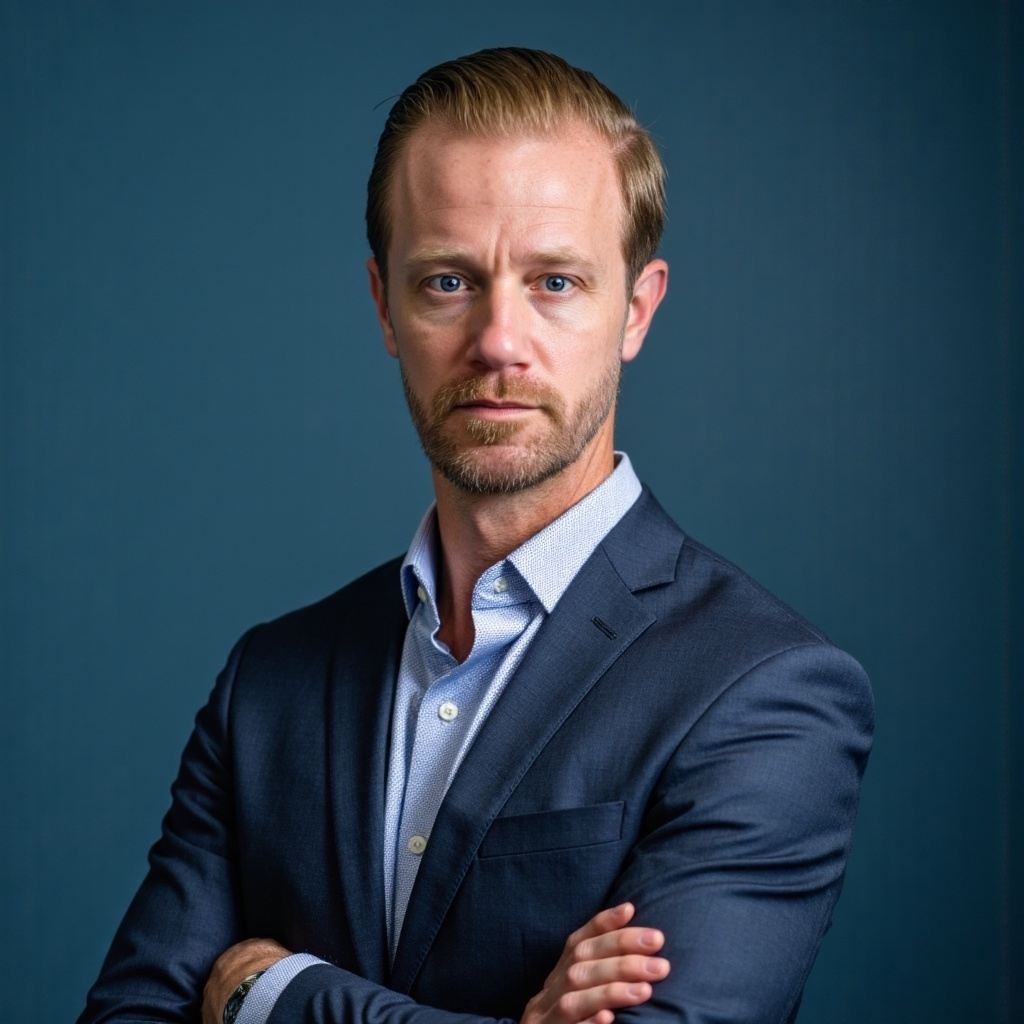
Aptum AI was founded by Nick Graham: twelve years in the U.S. Army, ten of them as a Green Beret. Former VP of Operations at two venture-backed cybersecurity startups, and Senior Data Scientist on the Enterprise AI team at a publicly traded enterprise SaaS company.
In 2026, Nick was selected to the inaugural cohort of Palantir's American Tech Fellowship for Veterans (ATF-V), a 12-week program run with Ontologize, focused on building production-grade AI and data systems on Palantir's Foundry and AIP platforms.
Nick holds a BA in Mathematics from the University of Cincinnati and an MS in Finance from Georgetown University.
Nick writes Dead Reckoning, a weekly newsletter on strategy for navigating uncertain business terrain in the age of AI. If you want to know how he thinks before you book a call, that's the place.
Twenty-odd years of being handed an unfamiliar situation and told to figure it out.
12 years, U.S. Army — 10 as a Green Beret
Special Forces work is assessment under time pressure with incomplete information, in somebody else’s system, where being wrong is expensive. That is also a fair description of diligence.
BA Mathematics, University of Cincinnati · MS Finance, Georgetown
Enough of both to read a model and the system underneath it without needing a translator in the room.
Stanford Ignite
Stanford Graduate School of Business’s programme for building and evaluating new ventures.
VP of Operations, two venture-backed cybersecurity startups
Roughly six years running operations and finance inside companies that were growing faster than their reporting. The board pack that takes three days is not a hypothetical.
Senior Data Scientist, Enterprise AI — a publicly traded enterprise SaaS company
Production data and AI work at enterprise scale, on the team responsible for putting it into the business rather than demonstrating it.
Palantir American Tech Fellowship for Veterans (ATF-V), 2026 — inaugural cohort
A 12-week programme run with Ontologize, focused on building production-grade AI and data systems on Palantir’s Foundry and AIP platforms.